
You’ve likely used a round rocker switch on appliances, in vehicles, or with industrial equipment—its straightforward design makes it a everyday choice. But what happens inside when you press it? Knowing how a round rocker switch works can help you select the right one for a project, solve functional issues, or just recognize the thoughtful design behind this common component.
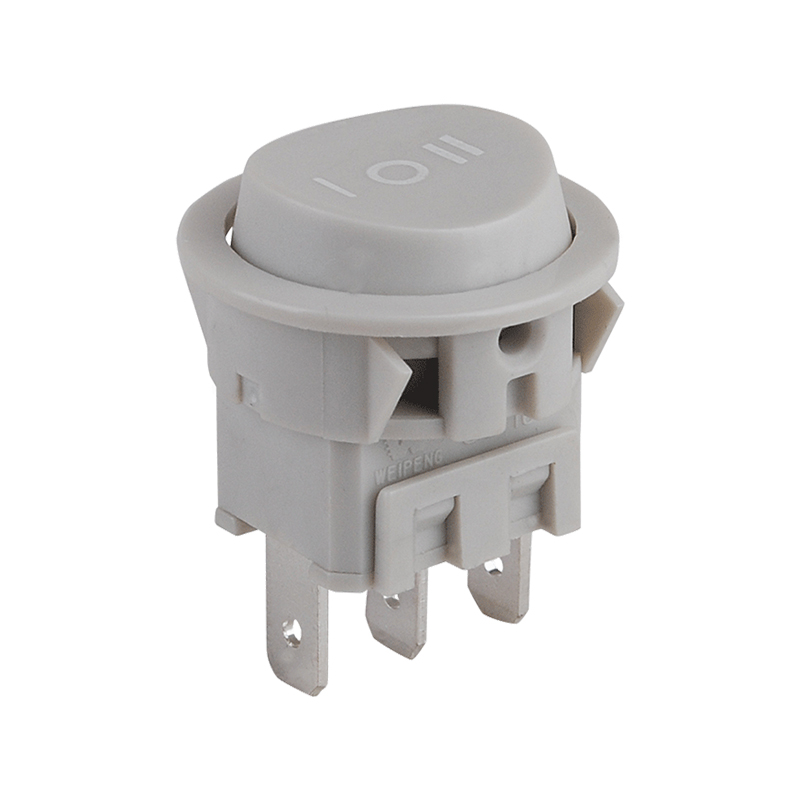
At its core, a round rocker switch manages electrical flow by opening or closing contacts inside. Pressing one side activates a spring-loaded mechanism that pivots—or “rocks”—to connect two metal contacts, allowing current to flow. Pressing the other side breaks the contact, stopping the electricity. This simple see-saw motion gives the switch its name, while the round shape refers to its circular button design, which fits cleanly into panels and dashboards.
Key Advantages of Using a Round Rocker Switch
- Easy to Operate: The rocking motion requires minimal effort and provides clear tactile feedback, so you can easily tell whether the switch is on or off, even by touch.
- Durability and Reliability: Most round rocker switches are built to withstand thousands of cycles, making them suitable for frequently used devices.
- Space-Efficient Design: The round shape allows for clean installation in compact panels, and many models are designed to be mounted in standard round holes.
- Versatility: Available in various current ratings, illumination options (LED or bulb), and colors, round rocker switches can be matched to different functional and aesthetic needs.
- Safety Features: Many include waterproof, dustproof, or sealed designs, which are ideal for outdoor equipment, marine applications, or industrial environments.
Where Are Round Rocker Switches Commonly Used?
- Thanks to their reliability and user-friendly design, you’ll find round rocker switches in a wide range of applications:
- Home and Kitchen Appliances: Used in blenders, coffee makers, and electric grills for simple on/off control.
- Automotive and Marine Panels: Ideal for controlling lights, fans, winches, or accessory power in vehicles, boats, and RVs.
- Industrial Machinery: Often installed on control panels for motors, conveyor systems, or manufacturing equipment.
- Outdoor and Power Equipment: Frequently found on generators, pressure washers, and garden tools where a sturdy, weather-resistant switch is needed.
- Consumer Electronics and Lighting: Used in desk lamps, audio equipment, and power strips for straightforward operation.
What to Consider When Selecting a Round Rocker Switch
- Electrical Rating: Match the switch’s voltage and current rating to your circuit’s requirements to ensure safe operation.
- Environment: If the switch will be exposed to moisture, dust, or temperature extremes, look for sealed or IP-rated models.
- Illumination: Decide whether you need a backlit or indicator-light switch for low-light conditions.
- Mounting Style: Check the switch’s diameter, panel thickness compatibility, and whether it requires a nut, snap-in, or screw mounting.
Final Thoughts
A round rocker switch operates through a basic rocking mechanism that opens or closes an electrical connection, delivering an efficient, durable, and easy-to-use method for controlling power. Whether installing it in a DIY task, replacing a worn switch, or selecting components for a design, knowing how it functions and where it works best supports practical and well-informed decisions. Combining simplicity with dependable performance, the round rocker switch continues to be a widely relied-upon option for everyday electrical applications.
Post time: Dec-30-2025