
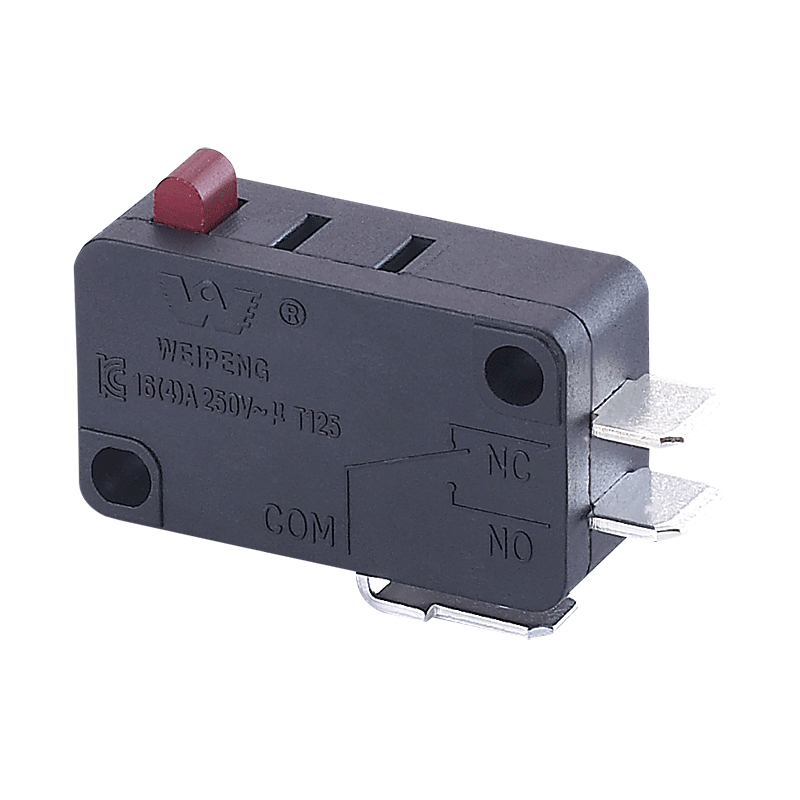
When working on electronics or appliances, you’ll often hear “micro switch.” A frequent question is whether they are all momentary. The answer is no this distinction is vital for your project’s success. Formally called Miniature Basic Switches, these compact components offer a precise snap-action mechanism, require minimal force, and deliver a dependable click. Their versatility comes from being available in different actuation types to match various applications.
Momentary vs. Maintained: The Key Difference
The heart of your question lies in the switch’s action type. This determines how the electrical circuit behaves when you press and release the actuator (the little lever or button).
·Momentary Action (Most Common): This is what many people initially think of. A momentary Miniature Basic Switch only closes (or opens) the circuit while force is applied. The instant you release the actuator, it springs back to its original “rest” position, breaking the circuit. Think of a doorbell, a car’s trunk light, or the trigger on a power tool they only work while being pressed.
·Maintained (Or Latching) Action: Some Miniature Basic Switches are designed to stay in their new position after being actuated. Press it once, and the circuit changes state and stays that way until it is pressed again to revert. This latching behavior is useful for applications like a power switch on a device or a toggle function.
Why Choose a Miniature Basic Switch?
These switches are prized for several key advantages:
1.Durability & Long Life: They are built for millions of cycles, thanks to their snap-action mechanism which makes and breaks contact quickly, reducing electrical arcing.
2.Precise Operation: They activate at a very specific point of travel (the “operating point”), ensuring consistent performance.
3.Compact Size: Their small footprint allows them to fit into tight spaces in appliances, vehicles, and industrial controls.
4.Safety & Reliability: The clear tactile and auditory feedback confirms the switch has been activated, an important feature in safety-critical applications.
Typical Applications and Selection Tips
Momentary micro switches are everywhere: as limit switches in printers and garage doors, as triggers in joysticks, or as safety interlocks in microwave ovens. Maintained types might be found in selector switches or as manual overrides.
When selecting a switch, don’t just ask if it’s a micro switch. Ask:
1. Is the action momentary or maintained?
2. What is the required electrical rating (voltage/current)?
3. What type of actuator (lever, roller, button) fits my mechanism?
4. What is the needed mechanical life expectancy?
Conclusion
Not all micro switches are momentary. The broad category of Miniature Basic Switches includes both momentary and maintained action types. Identifying the correct one is a fundamental step in your design or repair process. By focusing on the switch’s action specification, you ensure your device behaves exactly as intended, providing reliable performance for years to come. Always refer to the manufacturer’s technical data to confirm the switch’s characteristics for your specific application.
Post time: Jan-06-2026