
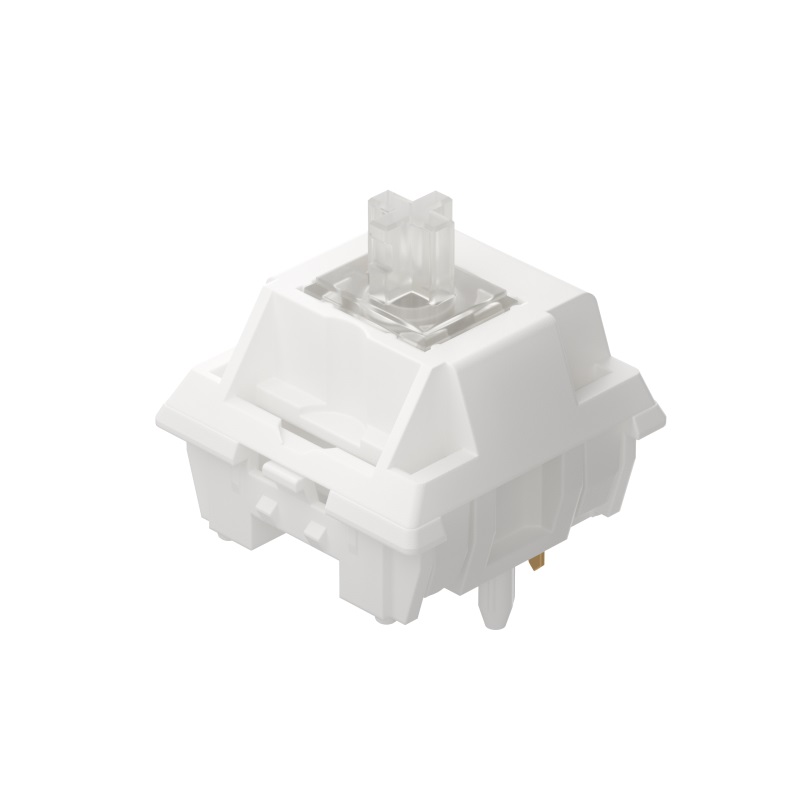
Micro limit switch types represent a critical category of precision electromechanical components, designed for accurate circuit control within constrained spaces. These devices are engineered to detect the presence or position of an object, often serving as safety interlocks or cycle counters in automated systems. The technical profile of a switch, the 5-pin linear model under discussion, provides a concrete framework for understanding the operational parameters that define various micro limit switch types, emphasizing performance over subjective appeal.
The mechanical construction is fundamental to the durability of these components. High-performance polymers, including POM, PC, and PA66, form the internal structure, offering excellent wear resistance, low friction, and long-term dimensional stability. This material selection is a key factor in achieving a mechanical lifespan of approximately 50 million cycles, a standard benchmark for reliable micro limit switch types. Such longevity ensures consistent performance in demanding applications, reducing the need for frequent maintenance or replacement.
The actuation characteristics are precisely quantified to ensure reliability. Key parameters include an operating force of 30±3 gf, which defines the minimal force required to activate the switch. The bottom-out force is specified at 42+3 gf, while the pre-travel distance to the electrical actuation point is 2.0±0.3 mm, and the total physical travel distance is 3.5±0.3 mm. These exacting specifications are central to the performance of precision micro limit switch types, guaranteeing predictable and repeatable response in every operation.
In practical applications, these technical specifications directly translate into functional reliability. The defined conduction stroke ensures that the electrical signal triggers at a consistent point, which is crucial for precise position control. The linear force curve provides smooth, consistent actuation without tactile feedback. These miniature limit switches are suitable for high-speed or repetitive tasks where consistent performance is more important than tactile feedback.
Analysis of a specific five-pin linear switch reveals the core engineering priorities behind micro limit switch types. The focus remains consistently on quantifiable metrics: material integrity, lifespan, and precise actuation force. The characteristics of these components depend not on subjective perception, but on their consistent reliability and accuracy, essential in a wide range of performance-critical electronic control and automation systems.
Post time: Nov-06-2025